Reconstituting peptides is a fundamental skill for researchers. Improper handling can degrade the compound or introduce contamination.
What You Need
- Lyophilized peptide vial
- Bacteriostatic water (0.9% benzyl alcohol)
- Alcohol swabs (70% isopropyl)
- Insulin syringes (29-31 gauge)
- Clean workspace
The Process
1. Preparation
Allow both the peptide and bacteriostatic water to reach room temperature. This prevents thermal shock that could degrade the peptide.
2. Clean Everything
Wipe the rubber stoppers of both vials with alcohol swabs and allow to air dry for 30 seconds.
3. Add Water Carefully
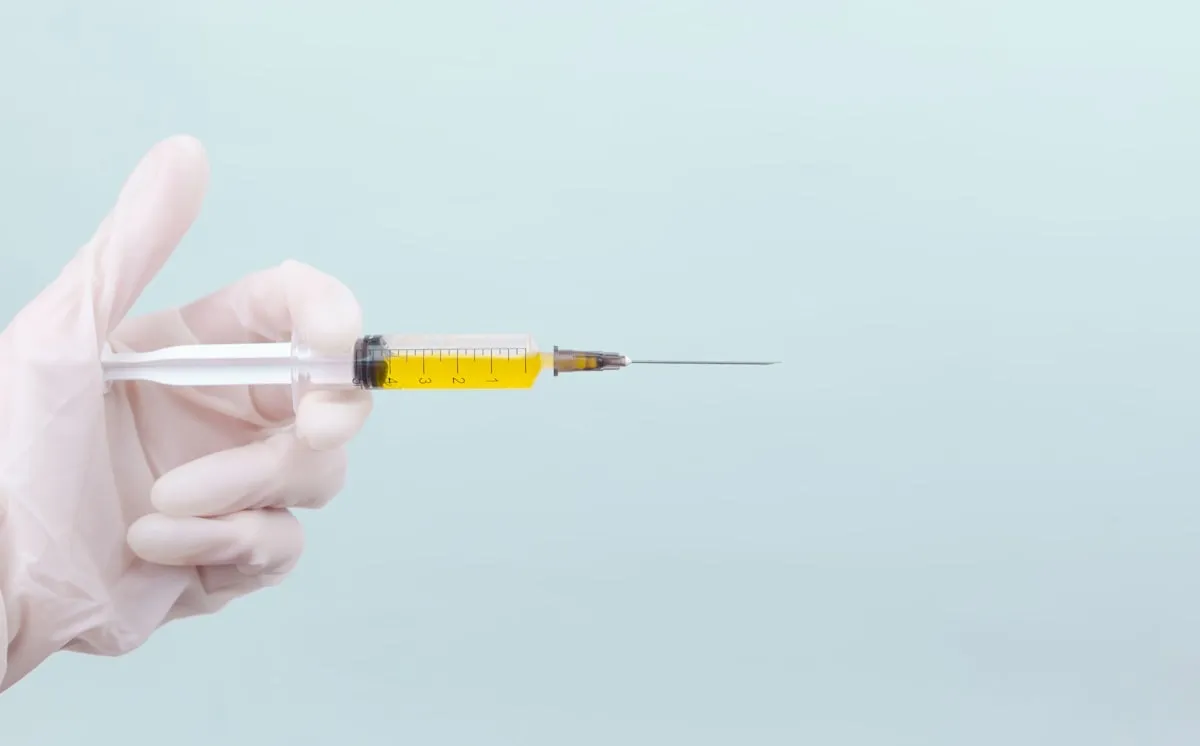
Draw your calculated amount of bacteriostatic water. Insert the needle into the peptide vial at an angle, aiming the stream at the glass wall - not directly onto the powder.
4. Gentle Mixing
Swirl the vial gently in a circular motion. Never shake vigorously as this can denature proteins. The powder should dissolve completely within 1-2 minutes.
5. Inspect
The solution should be clear with no visible particles or cloudiness.
Dosing Calculations
Formula: Concentration (mcg/unit) = Total peptide (mcg) ÷ Total units of water
Example: 5mg (5000mcg) peptide + 2mL bacteriostatic water = 2500mcg per mL, or 250mcg per 0.1mL (10 units on insulin syringe)
Storage
- Reconstituted peptides: Refrigerate at 2-8°C (36-46°F)
- Shelf life: Typically 4-6 weeks when properly stored
- Never freeze reconstituted peptides
- Protect from light