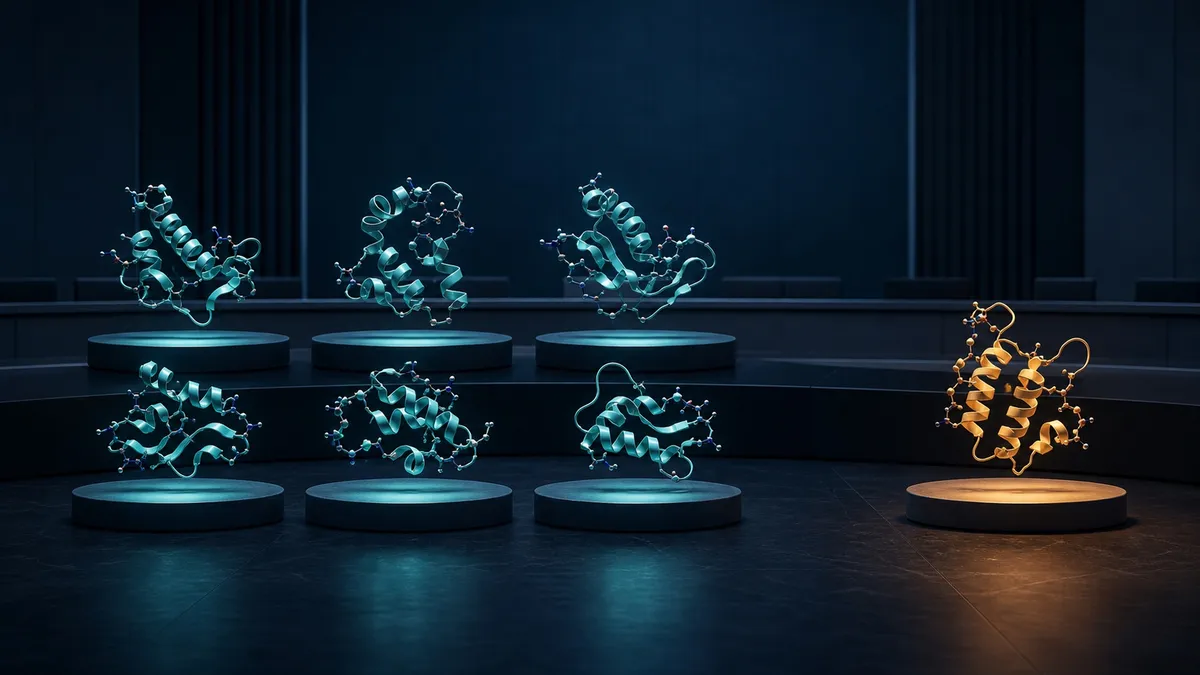
Selank and Semax are the two most-studied nootropic peptides to come out of Russian pharmacology. They share an origin lab, a delivery route, and a three-amino-acid stabilizing tail. They do almost opposite things in the brain.
In April 2026, the FDA quietly redrew the regulatory map for compounded peptides. Twelve peptides came off the agency's Category 2 "do not compound" list. Fourteen are expected to return to Category 1, the legal pathway for compounding pharmacies. Semax is on that list. Selank is not -- and the reason matters more than most articles ranking for "Selank legal US 2026" are willing to explain.
This is the long version of the comparison. Mechanisms, evidence, side effects, the actual current legal status, and what the July 2026 PCAC hearing is really deciding.
If you already know both peptides, skip to the comparison table or the legal status section.
Table of Contents
- The Two Peptides at a Glance
- The Russian Origin Story
- Selank: Tuftsin Analog, Anxiolytic Profile
- Semax: ACTH(4-10) Analog, Cognitive Stimulant
- Side-by-Side Comparison
- The Brain Boost Stack
- Legal Status: A Tale of Two Nominations
- Risks, Limits, and What the Data Doesn't Show
- Practical Research Considerations
- Frequently Asked Questions
- References
The Two Peptides at a Glance
Selank is a heptapeptide with the sequence Thr-Lys-Pro-Arg-Pro-Gly-Pro. It is a synthetic analog of tuftsin, a four-amino-acid immune-signaling peptide produced naturally in the spleen. The Pro-Gly-Pro tail (proline-glycine-proline, three amino acids that resist enzyme breakdown) was added to extend Selank's half-life from minutes to hours. Its primary effect is anxiolytic -- it reduces anxiety. It is registered as a prescription anxiolytic in the Russian Federation.
Semax is a heptapeptide with the sequence Met-Glu-His-Phe-Pro-Gly-Pro. It is a synthetic fragment of adrenocorticotropic hormone, specifically ACTH(4-10), with the same Pro-Gly-Pro stabilizing tail. Its primary effect is cognitive stimulation -- focus, attention, memory consolidation. It is registered as a nootropic in the Russian Federation, with regulatory approval since 2011 and additional indications in ischemic stroke and optic nerve disease.
The shared Pro-Gly-Pro tail is not a coincidence. Both peptides were designed at the same lab, the Institute of Molecular Genetics of the Russian Academy of Sciences, as part of a long-running program to engineer short, stable, intranasally-active neuropeptides. The Pro-Gly-Pro fragment is itself biologically active and contributes to both peptides' effects (Shram et al., 2017).
Both are administered as nasal sprays. The olfactory route gives partial access to the central nervous system without crossing the blood-brain barrier as a tablet would, and avoids the first-pass metabolism that would shred them in the gut.
The short answer for which to use: Semax for focus and cognition, Selank for anxiety and calm. They are sometimes combined.
The Russian Origin Story
Russian peptide pharmacology developed along a different track from US and Western European drug development. Where Western pharma chased small-molecule receptor agonists and antagonists, Soviet and post-Soviet researchers focused heavily on regulatory peptides -- short amino acid sequences extracted from or modeled on endogenous signaling molecules.
The Institute of Molecular Genetics began work on ACTH-derived peptides in the 1980s. ACTH itself has a 39-amino-acid sequence, with the first 13 residues responsible for melanocyte stimulation and residues 4-10 implicated in learning and memory effects in animal studies (De Wied & Jolles, 1982). Russian researchers isolated the 4-10 fragment, added Pro-Gly-Pro to extend its half-life, and produced what became Semax.
A parallel program targeted tuftsin, the four-amino-acid immune-modulator (Thr-Lys-Pro-Arg) discovered in the 1970s. Researchers added the same Pro-Gly-Pro stabilizing tail and produced Selank. Tuftsin's parent sequence has well-characterized effects on macrophages and natural killer cells; the engineered Selank version retains some immunomodulatory activity but is studied primarily for its central effects on anxiety and mood (Kolomin et al., 2013).
Both peptides were registered as pharmaceuticals in the Russian Federation in the early-to-mid 2000s. Semax received Russian regulatory approval first (1996 for cognitive indications, expanded to stroke in 2011); Selank followed in 2009.
Outside Russia, neither peptide has approval from the FDA, EMA, or any major Western regulator. The published clinical literature is heavily Russian, with smaller volumes in English-language journals. This is one of the reasons Selank and Semax remain underserved in Western nootropic discussions despite decades of clinical use.
Selank: Tuftsin Analog, Anxiolytic Profile
Selank's primary clinical evidence comes from Russian trials in generalized anxiety disorder (GAD) and neurasthenia, a syndrome of chronic fatigue and cognitive complaints that is recognized as a clinical entity in Russia and parts of Europe but not in current US diagnostic criteria.
Mechanism
Selank affects multiple pathways. The most-cited is GABAergic modulation. Unlike benzodiazepines, which bind directly to a specific allosteric site on the GABA-A receptor, Selank appears to act indirectly. A 2017 study in IMR-32 neuroblastoma cells found that Selank, like GABA itself and the antipsychotic olanzapine, altered the expression of genes encoding GABA-A receptor subunits in the prefrontal cortex and hippocampus (Volkova et al., 2017). The functional result is enhanced GABAergic tone without the sedation, tolerance, or dependence pattern seen with benzodiazepines.
Selank also potentiates the action of enkephalins, endogenous opioid peptides involved in mood and anxiety regulation. It inhibits enkephalin-degrading enzymes, prolonging the activity of endogenous opioids. This is part of why Selank produces a calming effect without classic sedation (Kolomin et al., 2013).
A 2017 study found that Selank potentiated the anxiolytic effect of diazepam in animal models, supporting the GABAergic mechanism (Kolik et al., 2017). Importantly, the combination did not produce additive sedation, suggesting Selank's GABAergic effect operates through a different downstream pathway than the benzodiazepines.
Clinical evidence
A 2008 Russian study compared Selank to medazepam, a benzodiazepine, in patients with generalized anxiety disorder and neurasthenia. The anxiolytic effects were similar, but Selank also showed antiasthenic (anti-fatigue) and psychostimulant effects that medazepam lacked. About 40% of patients were rapid responders -- their full symptom set dropped sharply within 1 to 3 days, with mean Hamilton Anxiety scores falling from 20.3 to 7.0 (Zozulia et al., 2008).
Subsequent open-label and observational studies in Russian psychiatric practice have reported similar anxiolytic effects with minimal side effects, no dependence, and no withdrawal symptoms after discontinuation. The long-term safety data come from Russian post-marketing experience, not double-blind placebo-controlled US trials.
Safety profile
Reported side effects across the published literature are mild and uncommon: transient nasal irritation, occasional headache, infrequent altered taste perception. No tolerance development is reported with chronic use. No dependence syndrome. No withdrawal symptoms on discontinuation.
The major caveat: human safety data outside Russia is sparse, and the published Russian trials are smaller and less rigorously blinded than what would be required for FDA approval.
Full profile: Selank on PeptideWiki. Practical dosing details: Selank Dosage Guide.
Semax: ACTH(4-10) Analog, Cognitive Stimulant
Semax was the first commercially registered ACTH-derived nootropic. Its evidence base is broader than Selank's, with both Russian clinical trials and a meaningful body of Western preclinical research.
Mechanism
Semax operates through several converging pathways:
BDNF and NGF upregulation. This is the most-cited mechanism. Brain-derived neurotrophic factor (BDNF) and nerve growth factor (NGF) are signaling proteins that support neuronal survival, dendritic growth, and synaptic plasticity. Semax administration produces sustained increases in BDNF and NGF expression in the rat hippocampus and frontal cortex, peaking around 8 hours after a single dose (Dolotov et al., 2006; Stavchansky et al., 2009). The effect is mediated through CREB (cAMP response element-binding protein), a master transcription factor that switches on neurotrophic gene programs.
Monoamine modulation. Semax sensitizes dopaminergic and serotonergic signaling, contributing to its rapid cognitive and mood effects. Where the BDNF effect is slow and structural, the monoamine effect is fast and functional -- many users report focus changes within 15 to 30 minutes of intranasal administration (Eremin et al., 2005).
Neuroprotection in ischemia. Semax has documented effects on gene expression patterns associated with stroke recovery. A 2024 review of neurotrophic gene transcription after cerebral ischemia found that Semax and the Pro-Gly-Pro fragment alone activated transcription of BDNF, NGF, and their receptor genes in animal models of stroke (Shevtsova et al., 2024). This mechanism underpins Semax's Russian regulatory approval for ischemic stroke recovery.
Clinical evidence
Russian trials have studied Semax in:
- Acute ischemic stroke (registered indication, 2011 expansion)
- Cognitive recovery after traumatic brain injury
- Optic nerve disease and ischemic optic neuropathies
- Cognitive deficits in attention disorders
- Performance enhancement under sustained cognitive load
Outside Russia, Western interest has focused on Semax as a candidate for stroke recovery and cognitive aging. The Alzheimer's Drug Discovery Foundation Cognitive Vitality program reviewed Semax in 2018 and noted strong preclinical signal for neuroprotection but limited Western clinical data. No US Phase II or Phase III trials have been registered.
Safety profile
Semax's published safety data is favorable across decades of Russian clinical use. Reported side effects: nasal irritation at the application site, occasional mild headache, sleep disturbances if administered late in the day (the stimulating effect can interfere with sleep onset). No tolerance, no dependence, no withdrawal.
The cleanest summary of Semax's clinical position: a peptide with substantial Russian human data, robust mechanistic evidence in animals and cell culture, and a near-total absence of large Western trials. That gap is what the July 2026 PCAC hearing is partly addressing.
Full profile: Semax on PeptideWiki. Practical dosing details: Semax Dosage Guide.
Side-by-Side Comparison
| Feature | Selank | Semax |
|---|---|---|
| Sequence | Thr-Lys-Pro-Arg-Pro-Gly-Pro | Met-Glu-His-Phe-Pro-Gly-Pro |
| Parent compound | Tuftsin (immune peptide) | ACTH(4-10) |
| Primary effect | Anxiolytic (anti-anxiety) | Nootropic (cognitive stimulant) |
| Mechanism | GABAergic modulation, enkephalin stabilization | BDNF/NGF upregulation via CREB, monoamine sensitization |
| Onset | 15-20 minutes (anxiolytic), 1-2 weeks for full effect | 15-30 minutes (focus), 4-8 weeks for structural effect |
| Route | Intranasal | Intranasal |
| Russian status | Registered prescription anxiolytic (2009) | Registered nootropic (1996), stroke indication (2011) |
| FDA status (US) | Not approved; nomination withdrawn September 2024 | Not approved; on the 14-peptide reclassification list, scheduled for July 24, 2026 PCAC review |
| Tolerance | Not reported in published trials | Not reported in published trials |
| Dependence | Not reported | Not reported |
| Sedation | Minimal | None (mildly stimulating) |
| Best for | Anxiety, stress, presentation/performance anxiety, attentional calm | Focus, working memory, sustained cognitive load, post-stroke recovery research |
| Stack partner | Often paired with Semax | Often paired with Selank |
| Major caveat | Limited Western clinical data | Limited Western clinical data |
| Comparable Western drug | Buspirone (without dependence concerns of benzos) | No close analog |
The Brain Boost Stack
The most-discussed peptide combination in cognitive research is Selank + Semax, sometimes referred to in Russian protocols and Western nootropic communities as a "Brain Boost" stack. The rationale is mechanistic complementarity: Semax provides the stimulating, focus-enhancing effect via BDNF/NGF and monoamine modulation, while Selank smooths the edge that the dopaminergic activation can produce in some users.
In published Russian observational data, the combination is used in cognitive rehabilitation protocols where patients need both attention/memory improvement (Semax) and management of the anxiety that often accompanies cognitive deficit (Selank). The two peptides do not interact pharmacologically in any documented way -- they target different pathways and are metabolized independently.
Western use patterns mirror this. People reporting use of the combination describe Semax as the "engine" (focus, mental energy) and Selank as the "stabilizer" (calm under load, smoother emotional response). What the published research does not yet address is whether the combination produces additive cognitive benefit beyond either alone in healthy adults. The Russian trial data is in clinical populations, not high-functioning users.
For a broader cognitive peptide picture, see the cognitive peptide category page. For a similar peptide pair compared structurally, see GHK vs GHK-Cu.
A Tale of Two Nominations
This is the section that most articles ranking for "Semax legal US 2026" get partially wrong. The regulatory situation is genuinely different for these two peptides, and conflating them produces incorrect guidance.
The 14-peptide list
On February 27, 2026, HHS Secretary Robert F. Kennedy Jr. announced on the Joe Rogan Experience podcast that approximately 14 of the 19 peptides previously placed on the FDA's Category 2 "do not compound" list would be moved back toward Category 1 status. Category 1 is the regulatory home for substances that compounding pharmacies can legally use as bulk drug substances under Section 503A of the Federal Food, Drug, and Cosmetic Act (FDA Pharmacy Compounding Advisory Committee Notice, April 16, 2026).
The 14 peptides expected to return to Category 1: BPC-157, DSIP, Epitalon, GHK-Cu, GHRP-2, GHRP-6, Kisspeptin-10, KPV, LL-37, Melanotan II, MOTS-C, PEG-MGF, Semax, and Thymosin beta-4 fragment.
What April 23, 2026 actually did
On April 23, 2026, the FDA removed twelve peptides from Category 2. The list: BPC-157, LL-37, DiHexa, DSIP, Epitalon, GHK-Cu (injectable form only), KPV, PEG-MGF, Melanotan II, MOTS-C, Semax, and TB-500. This was an administrative move tied to the original nominators withdrawing their nominations -- it removed the peptides from "do not compound" status but did not place them on the 503A bulks list. They sit in a regulatory gray zone until the Pharmacy Compounding Advisory Committee (PCAC) recommends formal Category 1 inclusion and the FDA acts on that recommendation (Foley & Lardner analysis, May 2026).
The July 2026 PCAC hearing
The PCAC will meet on July 23-24, 2026, to discuss whether to recommend specific peptides for the 503A bulk drug substances list:
- July 23: BPC-157, KPV, TB-500, MOTs-C
- July 24: Emideltide, Semax, Epitalon
A future PCAC meeting before the end of February 2027 will discuss five additional peptides: GHK-Cu, Melanotan II, Cathelicidin (LL-37), Dihexa acetate, and PEG-MGF.
The public docket is FDA-2025-N-6895, open for written comments at regulations.gov. Comments submitted by July 9, 2026 will be formally provided to the PCAC members ahead of the meeting.
Where Selank actually sits
Selank is not on the 14-peptide list. Selank is not scheduled for the July 2026 PCAC review. Selank is not scheduled for the February 2027 review.
Selank acetate (also designated TP-7) was removed from FDA Category 2 on September 20, 2024, on a different schedule and for a different reason: the original nominator withdrew the nomination entirely, taking Selank out of the 503A bulk drug substances framework altogether (FDA bulk drug substances guidance). Without an active nomination, the PCAC has nothing to review. There is no pathway for Selank to enter Category 1 unless someone re-nominates it and the agency restarts the evaluation process.
In practice this means:
-
Semax: Heading toward a formal regulatory decision in late 2026. If PCAC recommends Category 1 inclusion and FDA acts on it, compounding pharmacies will have a clear legal pathway to prepare Semax for patients with valid prescriptions.
-
Selank: In administrative limbo. Off Category 2 (so it is not flagged as a "do not compound" substance), but also not on any active path to Category 1. Compounders operating outside the 503A bulks framework do so under their own legal interpretation -- the agency has not formally cleared the substance for compounding use.
This is the kind of nuance that matters if you are a researcher, clinician, or compounding pharmacist trying to assess legal risk. "Both peptides are coming back" is the simple narrative. The accurate version is that one is heading to a regulatory decision and the other is not.
What "Category 1" actually authorizes
Even if Semax is added to the 503A bulks list, it does not become FDA-approved. Category 1 inclusion authorizes 503A and 503B compounding pharmacies to prepare individualized prescriptions from bulk Semax for patients with a valid prescription from a licensed healthcare provider. It does not authorize:
- Mass production
- Direct-to-consumer marketing
- Use without a prescription
- Sale by non-pharmacy retailers
Full FDA drug approval requires the standard Phase I, II, and III clinical trial process. None of the 14 peptides on the reclassification list have completed that process in the United States.
Risks, Limits, and What the Data Doesn't Show
Two honest caveats:
The Western clinical data is thin. Most Selank and Semax human evidence comes from Russian trials, often with smaller sample sizes, less rigorous blinding, and publication standards different from FDA-required clinical trial conduct. The mechanistic data (BDNF, NGF, GABAergic modulation) is well-established in animal models and cell culture. The clinical efficacy claims would benefit from larger placebo-controlled US trials, which have not been registered.
Source quality is highly variable in the research market. Both peptides are produced by compounding pharmacies and research-grade suppliers. The quality differential between a compounding pharmacy operating under USP 797/795 standards and a research-grade vial of unknown origin is large. Sourcing decisions matter for both safety and effect.
Long-term safety outside Russia is mostly inferred. No large-cohort, multi-decade Western pharmacovigilance database exists for either peptide. The Russian post-marketing experience is favorable but operates under different reporting standards. Anyone using either peptide for extended periods should treat the long-term safety profile as estimated rather than established.
Practical Research Considerations
Both peptides are administered as intranasal sprays. Typical research dosing protocols use:
- Selank: 0.1 to 0.3 mg per dose, 1-2 times daily, for 2-week courses
- Semax: 0.3 to 1.0 mg per dose, 1-2 times daily, with cycle protocols varying
Detailed dosing protocols, reconstitution guidance, and safety considerations live in the dosage guides:
For users considering the combination, see the cognitive peptide category page and the broader peptide stacks reference.
Frequently Asked Questions
Are Selank and Semax legal in the US right now?
Neither is FDA-approved as a drug. Both are sold in the US research compound market. As of April 2026, neither is on the FDA's Category 2 "do not compound" list, but only Semax is on a formal pathway toward Category 1 (legal compounding) status. Selank's nomination was withdrawn in September 2024, leaving it in regulatory limbo. State-level enforcement varies. Consult a healthcare provider and, where relevant, a compounding pharmacy familiar with current FDA bulk drug substances guidance.
Can I take Selank and Semax together?
The combination is the most commonly discussed nootropic peptide stack. They target different pathways (GABAergic vs. BDNF/CREB) and are metabolized independently. Russian clinical practice uses both together in some cognitive rehabilitation protocols. There is no published evidence of pharmacological interaction. There is also no Western clinical trial confirming additive benefit in healthy adults. Practical user reports consistently describe Semax as the focus driver and Selank as the stabilizer.
Do they cause dependence or withdrawal?
No tolerance, dependence, or withdrawal symptoms are reported in the published clinical literature for either peptide. This is one of the documented advantages of Selank over benzodiazepines for anxiety management. The absence of dependence appears to be a class feature of these short, regulatory peptides, though the long-term Western data is limited.
Why are these peptides called "Russian nootropics"?
Both were developed at the Institute of Molecular Genetics of the Russian Academy of Sciences in Moscow. Both are registered pharmaceuticals in the Russian Federation. Most of the human clinical data comes from Russian-language journals and Russian regulatory submissions. Russian pharmacology has historically focused more heavily on regulatory peptides than US or Western European pharma, which produced a body of cognitive peptide work that is only partially mirrored in Western literature.
How do these compare to BPC-157?
BPC-157 is an injury-recovery and gut-protective peptide derived from a fragment of body protection compound found in human gastric juice. It has nothing mechanistically in common with Selank or Semax beyond also being studied as a research peptide. BPC-157 acts on systemic tissue repair pathways (angiogenesis, growth factor modulation). Selank acts on GABA and enkephalin systems. Semax acts on BDNF, NGF, and monoamines. Different peptides for different problems. BPC-157 is also on the 14-peptide reclassification list and goes to PCAC on July 23, 2026.
When could Semax actually return to Category 1?
The PCAC reviews Semax on July 24, 2026. The Committee makes a recommendation; the FDA decides whether to accept it. If FDA accepts the recommendation and adds Semax to the 503A bulks list, compounding pharmacies will have a clear legal pathway to prepare Semax. The full timeline from PCAC recommendation to formal listing typically runs 6 to 18 months, sometimes longer. A best-case scenario is mid-2027 for formal Category 1 status. Selank is not on this timeline.
Does intranasal administration actually deliver these peptides to the brain?
Intranasal administration uses the olfactory and trigeminal nerve pathways to deliver compounds directly to the central nervous system, bypassing the blood-brain barrier in part. The route is well-validated for some neuropeptides and contested for others. For Selank and Semax specifically, the Russian clinical effects support functional CNS penetration, and rodent studies confirm measurable brain levels after intranasal dosing. The bioavailability is not 100%, and the route is more variable than IV administration, but it is the standard delivery method for both peptides in clinical and research use.
Are there any contraindications I should know about?
The published Russian literature does not flag major contraindications, but several caveats apply. Pregnancy and lactation safety is not established for either peptide. Both should be approached with caution by anyone with a documented allergy to peptide-based pharmaceuticals. Drug interaction data is sparse outside the Russian psychiatric literature. Anyone taking other CNS-active medications (antidepressants, anxiolytics, ADHD medications) should consult a healthcare provider before adding either peptide.
References
-
Zozulia AA, Neznamov GG, Siuniakov TS, et al. Efficacy and possible mechanisms of action of a new peptide anxiolytic selank in the therapy of generalized anxiety disorders and neurasthenia. Zh Nevrol Psikhiatr Im S S Korsakova. 2008;108(4):38-48. PubMed
-
Kolik LG, Konstantinopolsky MA, Nadorova AV, Kruglov SV, Kolyasnikova KN, Durnev AD. Peptide Selank Enhances the Effect of Diazepam in Reducing Alcohol Withdrawal Syndrome in Rats. Bull Exp Biol Med. 2017. PMC
-
Volkova A, Shadrina M, Kolomin T, et al. GABA, Selank, and Olanzapine Affect the Expression of Genes Involved in GABAergic Neurotransmission in IMR-32 Cells. Front Pharmacol. 2017;8:89. PubMed
-
Kolomin T, Shadrina M, Slominsky P, Limborska S, Myasoedov N. A new generation of drugs: synthetic peptides based on natural regulatory peptides. Neurosci Med. 2013;4(4):223-252. PubMed
-
Dolotov OV, Karpenko EA, Inozemtseva LS, et al. Semax, an analog of ACTH(4-10), regulates expression of immediate early genes in the rat hippocampus. Mol Biol (Mosk). 2006;40(2):203-206. PubMed
-
Stavchansky VV, Yuzhakov VV, Botsina AY, et al. Comparison of the temporary dynamics of NGF and BDNF gene expression in rat hippocampus, frontal cortex, and retina under Semax action. Mol Biol (Mosk). 2009;43(6):1031-1039. PubMed
-
Eremin KO, Kudrin VS, Saransaari P, et al. Semax, an ACTH(4-10) analogue with nootropic properties, activates dopaminergic and serotoninergic brain systems in rodents. Neurochem Res. 2005;30(12):1493-1500. PubMed
-
Shevtsova EP, Stavchansky VV, Vetrile LA, et al. Semax and Pro-Gly-Pro Activate the Transcription of Neurotrophins and Their Receptor Genes after Cerebral Ischemia. Cell Mol Neurobiol. 2024. PMC
-
Shram SI, Shadrina MI, Slominsky PA, Limborska SA, Myasoedov NF. Influence of intranasally administered semax and pro-gly-pro tripeptide on activity of nigrostriatal dopaminergic system. Bull Exp Biol Med. 2017. PubMed
-
De Wied D, Jolles J. Neuropeptides derived from pro-opiocortin: behavioral, physiological, and neurochemical effects. Physiol Rev. 1982;62(3):976-1059. PubMed
-
US Food and Drug Administration. Pharmacy Compounding Advisory Committee Notice of Meeting; Establishment of a Public Docket; Request for Comments on Bulk Drug Substances Nominated for Inclusion on the Section 503A Bulk Drug Substances List. Federal Register, April 16, 2026. Federal Register
-
Foley & Lardner LLP. FDA to Consider Lifting Restrictions on Numerous Compounded Peptides. May 2026. Foley