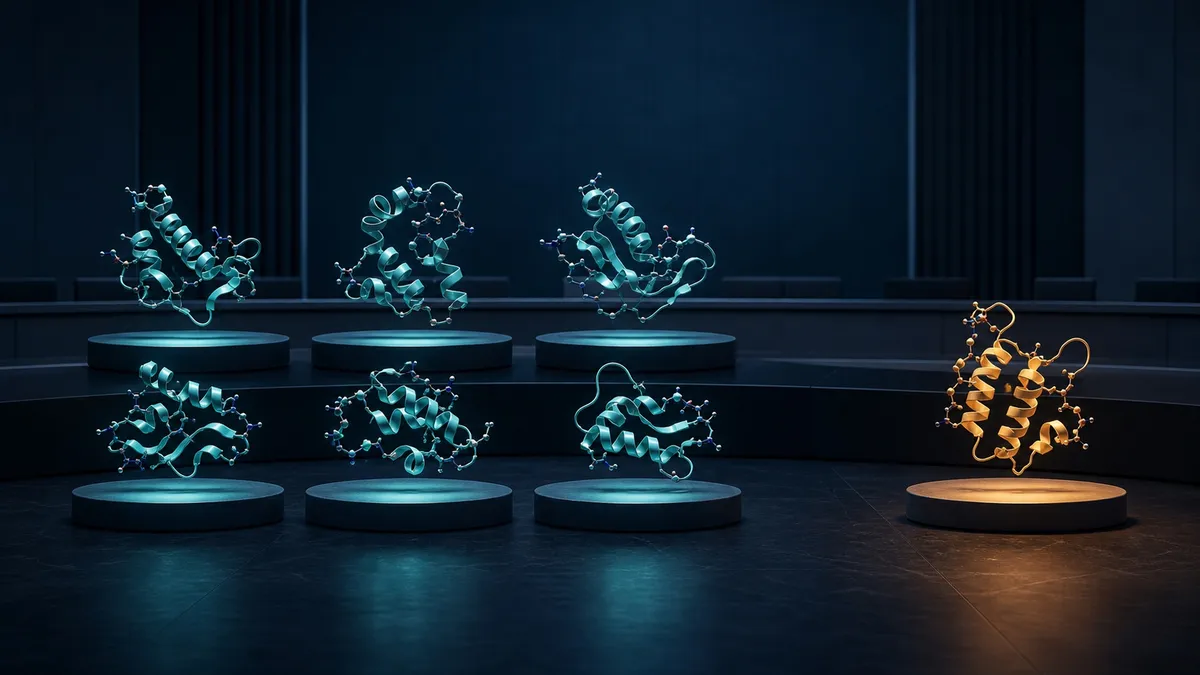
The GLOW stack is a popular "peptide stack" that combines BPC-157, TB-500 (commonly discussed alongside thymosin beta-4 / Tβ4), and GHK-Cu (copper peptide). It's discussed most often for two reasons:
- Recovery-focused themes (soft tissue repair, inflammation, angiogenesis)
- Aesthetics-focused themes (skin remodeling, collagen signaling, wound healing)
This post explains what the GLOW stack is, why it's popular, what each component does, and what studies have shown.
Important: These compounds are widely discussed online, but they are not FDA-approved for medical use in this context, and much of the evidence is preclinical (cell/animal studies). Human safety, dosing, and long-term outcomes are not established.
What Is the GLOW Stack?
The GLOW stack typically refers to:
- BPC-157 – a stable gastric pentadecapeptide studied for tissue protection and repair signaling
- TB-500 – commonly marketed as a thymosin beta-4–related peptide; many published studies are on thymosin beta-4 / Tβ4, not TB-500 specifically
- GHK-Cu – a copper-binding tripeptide studied for skin repair, remodeling, and gene expression changes relevant to regeneration
Why It's Called "GLOW"
The nickname comes from the idea that stacking repair + recovery signaling (BPC-157, thymosin beta-4–related research) with skin remodeling signaling (GHK-Cu) may support a "glow" look—i.e., healthier-looking skin—while staying in the "recovery and regeneration" lane.
What Does the GLOW Stack Do?
The GLOW stack is popular because the three peptides are often described as complementary across three themes:
1) Soft Tissue Recovery and Repair Signaling
- BPC-157 has been studied in tendon and connective tissue injury models, including Achilles tendon repair models.
- Thymosin beta-4 (Tβ4) has been studied for wound healing, angiogenesis-related processes, and connective tissue repair models (e.g., ligament healing).
2) Angiogenesis and Blood-Vessel Support
- BPC-157 is frequently studied in relation to vascular integrity and healing signaling, including nitric oxide (NO) system interactions.
- Tβ4 has published data showing improved healing in skin wound models, consistent with angiogenesis being a key part of repair.
3) Skin Remodeling and "Repair Biology"
- GHK-Cu has been studied for skin regenerative effects, collagen-related remodeling signals, and broad gene-expression shifts associated with tissue health.
Why Is the GLOW Stack Popular (and With Who)?
The GLOW stack is especially popular in communities where people care about recovery + appearance at the same time.
Common audiences (online / community-driven):
- Fitness and training communities (especially those focused on soft tissue recovery)
- Biohacking / longevity communities (people tracking recovery, sleep, inflammation, and "skin quality")
- Aesthetics and skincare enthusiasts (primarily drawn to GHK-Cu and "skin remodeling" discussions)
- Injury-recovery forums (often pairing BPC-157 with thymosin beta-4–related peptides)
Why the combo is appealing:
- BPC-157 is discussed for injury/recovery.
- Tβ4/TB-500 is discussed for tissue organization and wound-healing.
- GHK-Cu is discussed for skin quality, collagen remodeling signaling, and regeneration-related gene expression.
GLOW Stack Components: What Each Peptide Is and What Studies Show
BPC-157 (Body Protection Compound-157)
What it is: A synthetic peptide derived from a naturally occurring gastric protein fragment; often described as "stable" in harsh GI environments.
What it does (in research models):
- Studied in tendon healing, including transected Achilles tendon models and tendon detachment models in rats.
- Studied for broad organ-protective and vascular-related effects, including NO system interactions.
Specific example from the literature: A published Achilles tendon study reports accelerated healing in a transected rat model and stimulation of tendon cell growth in vitro.
TB-500 and Thymosin Beta-4 (Tβ4)
What it is (and a crucial clarification): Many scientific papers focus on thymosin beta-4 (Tβ4)—a naturally occurring peptide involved in actin binding and repair signaling—while TB-500 is commonly marketed as a thymosin beta-4–related peptide. When you see "TB-500 benefits," a lot of the published mechanistic and animal data people cite comes from Tβ4 studies.
What it does (in research models):
- Cutaneous wound healing: Tβ4 increased re-epithelialization and improved healing outcomes in a rat full-thickness wound model.
- Ligament healing: Tβ4 promoted healing and improved biomechanical properties in a rat medial collateral ligament (MCL) model.
- Muscle repair signaling: Tβ4-related signaling has been studied in skeletal muscle injury/regeneration contexts.
Specific example from the literature: A rat wound model reported significantly improved re-epithelialization and contraction measures with Tβ4 compared to controls.
GHK-Cu (Copper Peptide)
What it is: GHK (glycyl-L-histidyl-L-lysine) is a naturally occurring human peptide that binds copper; GHK-Cu is the copper-complex form often associated with its biological activity.
What it does (in research models):
- Skin repair and remodeling: Reviewed for regenerative effects in skin, including signaling relevant to collagen and extracellular matrix remodeling.
- Gene expression: Published work reports that GHK/GHK-Cu can influence expression of genes associated with repair and anti-inflammatory pathways.
- Clinical/dermal context: Published dermatologic literature has discussed topical copper tripeptide complexes and cosmetic/skin-related outcomes.
Specific example from the literature: A review describes broad gene-expression impacts linked to GHK-Cu's regenerative profile and proposes mechanisms for skin repair.
What the Evidence Can and Can't Tell You
What research supports (general):
These peptides have preclinical evidence consistent with roles in repair-related pathways: wound healing, angiogenesis, connective tissue healing signals, and dermal remodeling.
What research does not establish:
- Clear human efficacy for the "stack" as a combined protocol
- Long-term human safety, standardized dosing, or interactions
- Whether perceived "stack synergy" translates to real-world outcomes
In other words: the GLOW stack is a community-created concept built from separate lines of research—not a clinically validated combination therapy.
Frequently Asked Questions About the GLOW Stack
Is the GLOW stack FDA-approved? No. These compounds are widely discussed in research and online communities, but they are not FDA-approved as a combined therapy, and much of the evidence is preclinical.
Is TB-500 the same as thymosin beta-4? They're often discussed together, but many published studies people cite are on Tβ4, not TB-500-specific human trials.
Why do people associate GHK-Cu with "glow"? Because GHK-Cu is studied in skin regeneration and remodeling, including gene-expression effects linked to tissue repair pathways.
References (Studies and Reviews)
-
Staresinic M, et al. Gastric pentadecapeptide BPC 157 accelerates healing of transected rat Achilles tendon and in vitro stimulates tendocytes growth. Journal of Orthopaedic Research (2003).
-
Krivic A, et al. Achilles detachment in rat and stable gastric pentadecapeptide BPC 157… PubMed record (2006).
-
Sikiric P, et al. Stable gastric pentadecapeptide BPC 157… PubMed Central review (2019).
-
Sikiric P, et al. BPC 157 and NO-system… PubMed record (2014).
-
Malinda KM, et al. Thymosin beta4 accelerates wound healing. Journal of Investigative Dermatology (1999).
-
Xu B, et al. Thymosin β4 enhances the healing of medial collateral ligament in a rat model. PubMed record (2013).
-
Tokura Y, et al. Muscle injury-induced thymosin β4… PubMed record (2011).
-
Pickart L, et al. Regenerative and Protective Actions of the GHK-Cu Peptide… PubMed Central review (2018).
-
Pickart L. GHK peptide as a natural modulator… PubMed Central review (2015).
-
Pickart L, et al. The Effect of the Human Peptide GHK on Gene Expression… PubMed Central (2017).
-
Topical copper tripeptide complex (cosmetic/dermal context). JAMA Network PDF.