If you spend any time researching peptides for recovery or injury healing, two names come up constantly: TB-500 and BPC-157. They're often mentioned together, frequently stacked, and sometimes confused for each other.
They're not the same thing. Not even close.
TB-500 and BPC-157 are both research peptides studied for tissue repair, but they come from different biological origins, work through different molecular mechanisms, and have different practical applications. Understanding the actual differences helps you make an informed decision about which one — or both — might be relevant to your situation.
What Is TB-500?
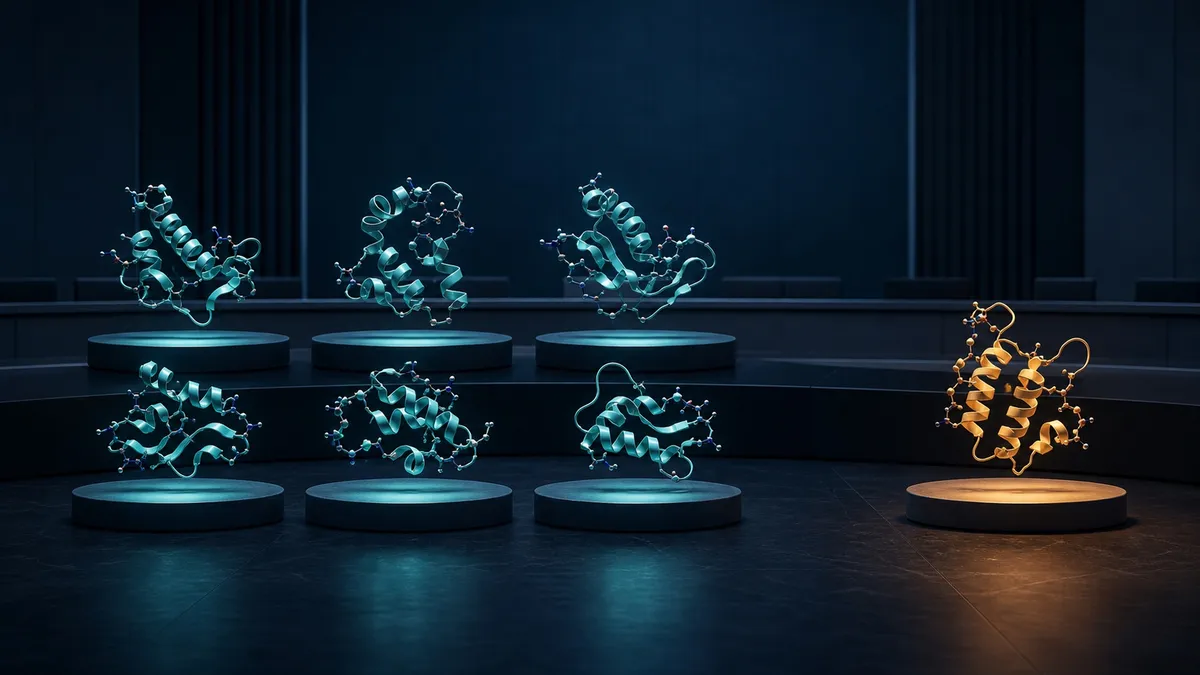
TB-500 is a synthetic peptide fragment of thymosin beta-4 (Tβ4), a 43-amino acid protein that occurs naturally throughout the human body. Thymosin beta-4 is one of the most abundant intracellular proteins in mammalian cells, and it's upregulated at sites of tissue injury — your body produces more of it when something is damaged and needs repair.
The key mechanism of thymosin beta-4 involves actin regulation. Actin is a structural protein critical for cell movement, and TB-500's ability to sequester G-actin promotes cell migration — essentially helping repair cells travel to injury sites faster (Goldstein et al., 2005).
TB-500 also promotes angiogenesis (new blood vessel formation), reduces inflammation through downregulation of inflammatory cytokines, and has been shown to reduce scar formation in wound healing models by promoting more organized collagen deposition.
For a full breakdown of TB-500, including dosing protocols, see our TB-500 peptide page and TB-500 Dosage Guide.
What Is BPC-157?
BPC-157 (Body Protection Compound-157) is a synthetic pentadecapeptide — a chain of 15 amino acids — derived from a protective protein found in human gastric juice. Unlike TB-500, which comes from a ubiquitous intracellular protein, BPC-157 originates from the gastrointestinal system.
BPC-157's primary mechanisms involve growth factor modulation and the nitric oxide (NO) system. It upregulates VEGF (vascular endothelial growth factor), promotes collagen production, accelerates angiogenesis, and has shown protective effects on the GI tract, liver, and brain in preclinical models (Sikiric et al., 2016).
One unique property of BPC-157 is its gastric acid stability. Most peptides are destroyed by stomach acid, but BPC-157 — derived from a gastric protein — survives the digestive environment, making oral administration viable.
For full details on BPC-157 including dosing, see our BPC-157 peptide page and BPC-157 Dosage Guide.
Head-to-Head Comparison
Here's how TB-500 and BPC-157 compare across the dimensions that matter most.
Origin and Structure
| Property | TB-500 | BPC-157 |
|---|---|---|
| Full name | Thymosin Beta-4 fragment | Body Protection Compound-157 |
| Origin | Thymus / ubiquitous intracellular protein | Human gastric juice protein |
| Size | 43 amino acids (full Tβ4) | 15 amino acids |
| Natural occurrence | Found throughout the body | Fragment of a gastric protein |
| Gastric stability | Not acid-stable (injection only) | Acid-stable (oral viable) |
Mechanism of Action
| Mechanism | TB-500 | BPC-157 |
|---|---|---|
| Primary pathway | Actin sequestration → cell migration | Growth factor modulation → tissue repair |
| Angiogenesis | Yes — promotes new blood vessel growth | Yes — via VEGF upregulation |
| Anti-inflammatory | Yes — cytokine downregulation | Yes — NO system modulation |
| Collagen effects | Promotes organized collagen patterning | Promotes collagen production |
| Scar reduction | Strong evidence in preclinical models | Some evidence |
| GI protection | Not a primary effect | Core mechanism — protects gut lining |
| Neurological effects | Limited data | Neuroprotective effects in preclinical studies |
Practical Use Comparison
| Factor | TB-500 | BPC-157 |
|---|---|---|
| Typical dose | 2-5 mg, 2x/week (loading); 2 mg 1x/week (maintenance) | 250-500 mcg daily |
| Administration | Subcutaneous injection | SubQ injection or oral |
| Cycle length | 4-8 weeks | 4-8 weeks |
| Onset | 1-3 weeks reported | 1-4 weeks reported |
| Cost per cycle | Generally higher (larger doses needed) | Generally lower |
| Reconstitution | Same process as BPC-157 | Standard reconstitution |
When to Choose TB-500
TB-500 tends to be favored for situations involving structural tissue damage where cell migration and remodeling are priorities:
- Muscle tears and strains — TB-500's actin regulation directly supports the cellular machinery involved in muscle repair
- Soft tissue injuries with significant inflammation — its anti-inflammatory effects are well-documented in preclinical models
- Surgical recovery — particularly for procedures involving connective tissue
- Chronic injuries that haven't responded to other approaches — the cell migration mechanism may help restart stalled healing processes
- Scar tissue concerns — TB-500 has the stronger preclinical data for promoting organized tissue remodeling over fibrotic scarring
TB-500 is also often chosen by individuals who are already comfortable with injection-based protocols and are dealing with more systemic or widespread tissue issues rather than a single localized injury.
When to Choose BPC-157
BPC-157 tends to be the first choice for:
- Tendon and ligament injuries — this is where the bulk of BPC-157's preclinical research is focused, with multiple studies showing accelerated healing in transected tendon models
- Gut health issues — BPC-157's gastric origin and acid stability make it uniquely relevant for GI applications (IBS, gastric ulcers, intestinal inflammation)
- Joint pain and inflammation — commonly reported in community experience
- First-time peptide users — BPC-157 has a lower dose (250-500 mcg vs 2-5 mg), lower cost per cycle, and the option of oral administration, making it more accessible
- People who prefer oral administration — BPC-157 is one of the very few peptides that can be taken orally with meaningful bioavailability
Stacking TB-500 and BPC-157: The "Wolverine Stack"
The combination of TB-500 and BPC-157 is the single most popular peptide stack in the recovery space — sometimes called the "Wolverine Stack" in online communities. The logic behind combining them is straightforward: they work through complementary, non-overlapping mechanisms.
TB-500 brings:
- Cell migration to injury sites
- Actin regulation for structural repair
- Strong anti-inflammatory effects
- Organized tissue remodeling
BPC-157 brings:
- Growth factor upregulation (VEGF, FGF, HGF)
- Collagen production
- Nitric oxide system modulation
- GI protective effects
Together, they cover both the "getting repair cells to the site" problem (TB-500) and the "building new tissue once they arrive" problem (BPC-157).
Standard Stack Protocol
| Peptide | Loading Phase (Weeks 1-4) | Maintenance Phase (Weeks 5-8) |
|---|---|---|
| BPC-157 | 250-500 mcg daily (SubQ) | 250 mcg daily (SubQ) |
| TB-500 | 2-5 mg twice weekly (SubQ) | 2 mg once weekly (SubQ) |
TB-500 typically uses a front-loaded approach — higher frequency in the first month, then tapering to maintenance. BPC-157 stays at a consistent daily dose throughout. Many people inject both at the same time in the same session (different injection sites or same syringe if compatible reconstitution volumes).
For a detailed dosing breakdown, see our BPC-157 Dosage Guide and TB-500 Dosage Guide.
What the Research Says — And What It Doesn't
Both TB-500 and BPC-157 have extensive preclinical (animal study) evidence supporting their tissue repair properties. But a critical distinction needs to be made:
Neither peptide has completed randomized, controlled human clinical trials.
The dosage ranges, cycle lengths, and reported benefits you see online — including in this article — are extrapolated from animal studies and community anecdotal experience. That doesn't mean they don't work, but it means the evidence level is fundamentally different from, say, semaglutide, which has gone through full Phase 3 human trials with thousands of participants.
What we know with reasonable confidence from preclinical research:
- Both peptides promote tissue repair through distinct mechanisms
- Both have favorable safety profiles in animal models (wide therapeutic margins, no established lethal dose)
- Both promote angiogenesis — which is beneficial for healing but raises theoretical concerns for individuals with active or history of cancer
- TB-500 has stronger data for cell migration and scar reduction
- BPC-157 has stronger data for tendon healing and GI protection
What we don't know:
- Optimal human dosing (current ranges are extrapolated)
- Long-term safety in humans
- Whether the combination is meaningfully better than either alone (no controlled comparison studies)
- Full drug interaction profiles
- Whether timing, injection site proximity, or other protocol variables significantly affect outcomes
Safety Considerations
Both peptides share similar safety profiles and contraindications:
- Cancer or cancer history — both promote angiogenesis, which could theoretically support tumor growth. This is a mechanism-based concern, not a demonstrated effect, but it's the most commonly cited reason to avoid both.
- Pregnancy and breastfeeding — no safety data exists
- Anticoagulant use — both may interact with coagulation through angiogenic and NO pathways
- Pre-surgery — discontinue 1-2 weeks before planned procedures
- WADA status — both are prohibited in competitive athletics
Neither peptide is FDA-approved or approved by any global regulatory authority.
Quick Decision Guide
Choose BPC-157 if:
- This is your first time using research peptides
- Your primary concern is a tendon, ligament, or joint issue
- You want the option of oral administration
- Gut health is a goal
- Budget is a factor
Choose TB-500 if:
- You're dealing with a muscle tear or significant soft tissue injury
- Reducing scar tissue formation is a priority
- You have systemic inflammation across multiple areas
- You're comfortable with injection protocols and larger doses
Stack both if:
- You have a significant injury and want to maximize recovery potential
- You're post-surgery and your physician is aware
- Budget allows for both compounds
- You've used at least one of them before and tolerated it well
This article is for educational and informational purposes only. It is not medical advice. Neither TB-500 nor BPC-157 is FDA-approved. Always consult with a qualified healthcare provider before starting any peptide protocol.
Key References:
- Goldstein AL, Hannappel E, Kleinman HK. "Thymosin β4: actin-sequestering protein moonlights to repair injured tissues." Trends Mol Med. 2005;11(9):421-429.
- Sikiric P, et al. "Brain-gut axis and pentadecapeptide BPC 157." Curr Neuropharmacol. 2016;14(8):857-865.
- Sosne G, et al. "Thymosin beta 4 promotes corneal wound healing." Exp Eye Res. 2002;74(2):293-299.
- Hsieh MJ, et al. "Therapeutic potential of pro-angiogenic BPC157 for tendon healing." Biomedicines. 2021;9(7):861.
- Malinda KM, et al. "Thymosin β4 accelerates wound healing." J Invest Dermatol. 1999;113(3):364-368.
- Sikiric P, et al. "Stable gastric pentadecapeptide BPC 157: Novel therapy in gastrointestinal tract." Curr Pharm Des. 2011;17(16):1612-1632.