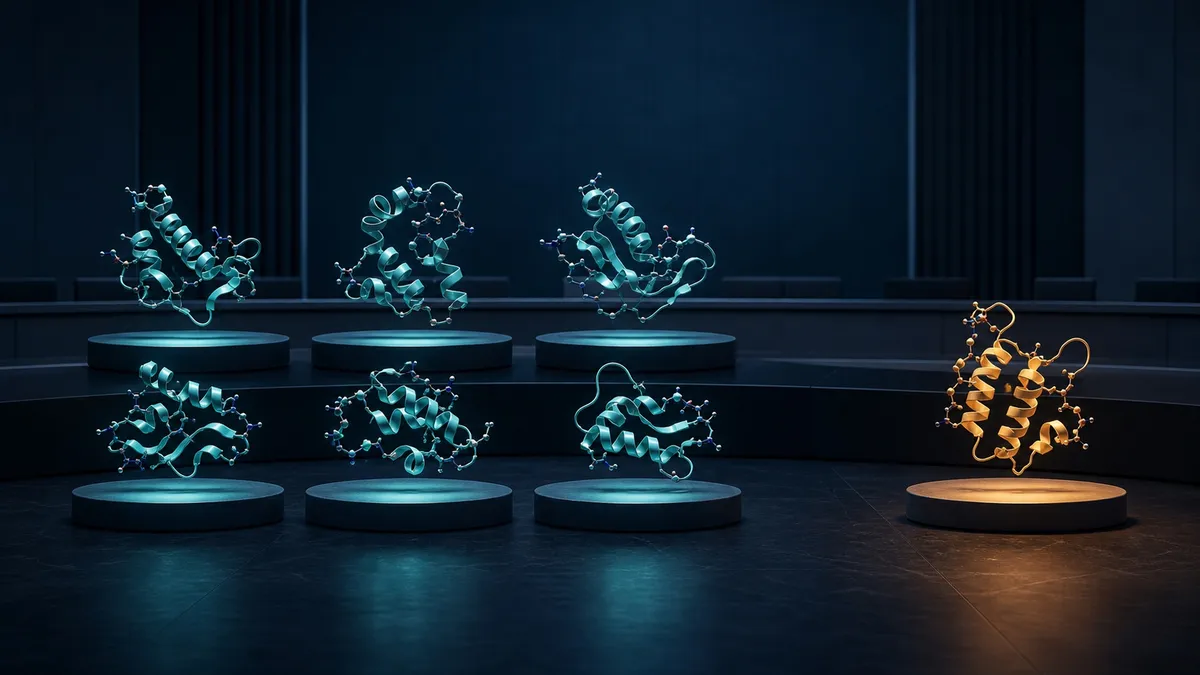
GHK-Cu, commonly referred to as copper peptide, is one of the most extensively studied peptides in regenerative and cosmetic research. Known for its role in skin health, wound healing, hair growth, and tissue repair, GHK-Cu has been used in scientific research for decades and remains a cornerstone peptide in dermatology and anti-aging applications.
This guide covers what GHK-Cu is, how it works, what it's used for, potential benefits, and commonly referenced dosage ranges based on published research and real-world protocols.
What Is GHK-Cu?
GHK-Cu is a naturally occurring tripeptide composed of three amino acids:
- Glycine
- Histidine
- Lysine
When bound to copper (Cu²⁺), the peptide forms glycyl-L-histidyl-L-lysine copper complex, or GHK-Cu.
GHK was first identified in human plasma, saliva, and urine, with levels shown to decline with age. This decline is believed to be one reason interest in copper peptides has grown within longevity and regenerative research communities.
How GHK-Cu Works in the Body
GHK-Cu functions primarily as a cell signaling peptide. Rather than acting like a hormone or drug, it influences gene expression and cellular behavior.
Research suggests GHK-Cu may:
- Activate genes involved in tissue repair and remodeling
- Increase collagen and elastin synthesis
- Modulate inflammatory responses
- Support angiogenesis (new blood vessel formation)
- Enhance antioxidant enzyme activity
GHK-Cu has been shown in laboratory studies to regulate hundreds of genes related to skin regeneration, immune response, and cellular growth pathways.
What Is GHK-Cu Used For?
GHK-Cu is most commonly researched and utilized for:
1. Skin Health & Anti-Aging
- Wrinkle reduction
- Improved skin firmness and elasticity
- Enhanced wound healing
- Improved skin texture and tone
2. Hair Growth & Scalp Health
- Follicle stimulation
- Reduced hair thinning
- Improved scalp circulation
- Support for hair regrowth cycles
3. Wound Healing & Tissue Repair
- Accelerated healing of skin injuries
- Improved scar appearance
- Support for post-procedure recovery
4. Anti-Inflammatory & Antioxidant Support
- Reduction of oxidative stress
- Modulation of inflammatory markers
- Protection against cellular damage
5. Longevity & Regenerative Research
- Gene expression modulation
- Cellular rejuvenation pathways
- Age-related tissue degeneration research
Benefits of GHK-Cu
Based on available research, GHK-Cu is associated with several potential benefits:
- Stimulates collagen and elastin production
- Improves skin thickness and elasticity
- Supports faster wound healing
- Enhances hair follicle health
- Reduces inflammation
- Promotes angiogenesis
- Acts as a potent antioxidant
- Supports overall tissue regeneration
Unlike many cosmetic compounds, GHK-Cu has demonstrated both topical and systemic biological activity in research models.
Common Forms of GHK-Cu
GHK-Cu is available in multiple research formats:
- Topical creams and serums
- Subcutaneous injectable research solutions
- Microneedling or mesotherapy formulations
- Cosmeceutical skincare products
Each form has different absorption and application considerations depending on research goals.
Typical GHK-Cu Dosage Schedules (Research-Based)
Important: The following information reflects commonly referenced research protocols and anecdotal research use. It is not medical advice.
Injectable GHK-Cu (Research Use)
- Daily Dose: 1–2 mg per day
- Frequency: Once daily
- Cycle Length: 4–8 weeks
- Route: Subcutaneous
Some advanced protocols split dosing into 0.5–1 mg twice daily to maintain more stable peptide levels.
Topical GHK-Cu
- Concentration: 0.05% – 0.5%
- Frequency: 1–2 times daily
- Application Area: Face, scalp, skin
- Duration: Ongoing
Topical GHK-Cu is often combined with microneedling to enhance penetration.
GHK-Cu in Peptide Stacks
GHK-Cu is frequently combined with other regenerative peptides, including:
- BPC-157 (tissue and gut repair)
- TB-500 (systemic healing and mobility)
- CJC-1295 / Ipamorelin (growth hormone signaling)
- Collagen peptides (structural support)
One popular combination is the GLOW Stack, which pairs GHK-Cu with BPC-157 and TB-500 for skin, connective tissue, and recovery-focused research.
Safety & Research Considerations
GHK-Cu has demonstrated a strong safety profile in studies when used within researched ranges. However:
- Excess copper exposure may cause irritation or oxidative stress
- Injection-site reactions can occur
- Topical formulations may cause temporary skin tingling or redness
Most protocols emphasize moderate dosing and cycling rather than continuous high exposure.
Key Takeaways
- GHK-Cu is a naturally occurring copper peptide involved in tissue repair and regeneration
- It plays a significant role in skin health, wound healing, hair growth, and anti-aging research
- Benefits are linked to gene regulation, collagen synthesis, and anti-inflammatory effects
- Common research dosing ranges from 1–2 mg per day injectable or 0.05–0.5% topical
- Often stacked with other regenerative peptides for synergistic effects
Learn More at PeptideWiki
PeptideWiki is your centralized resource for peptide education, research summaries, dosage references, calculators, and emerging peptide science. New peptide guides and tools are added regularly — check back often for updates.